



Clay votive shields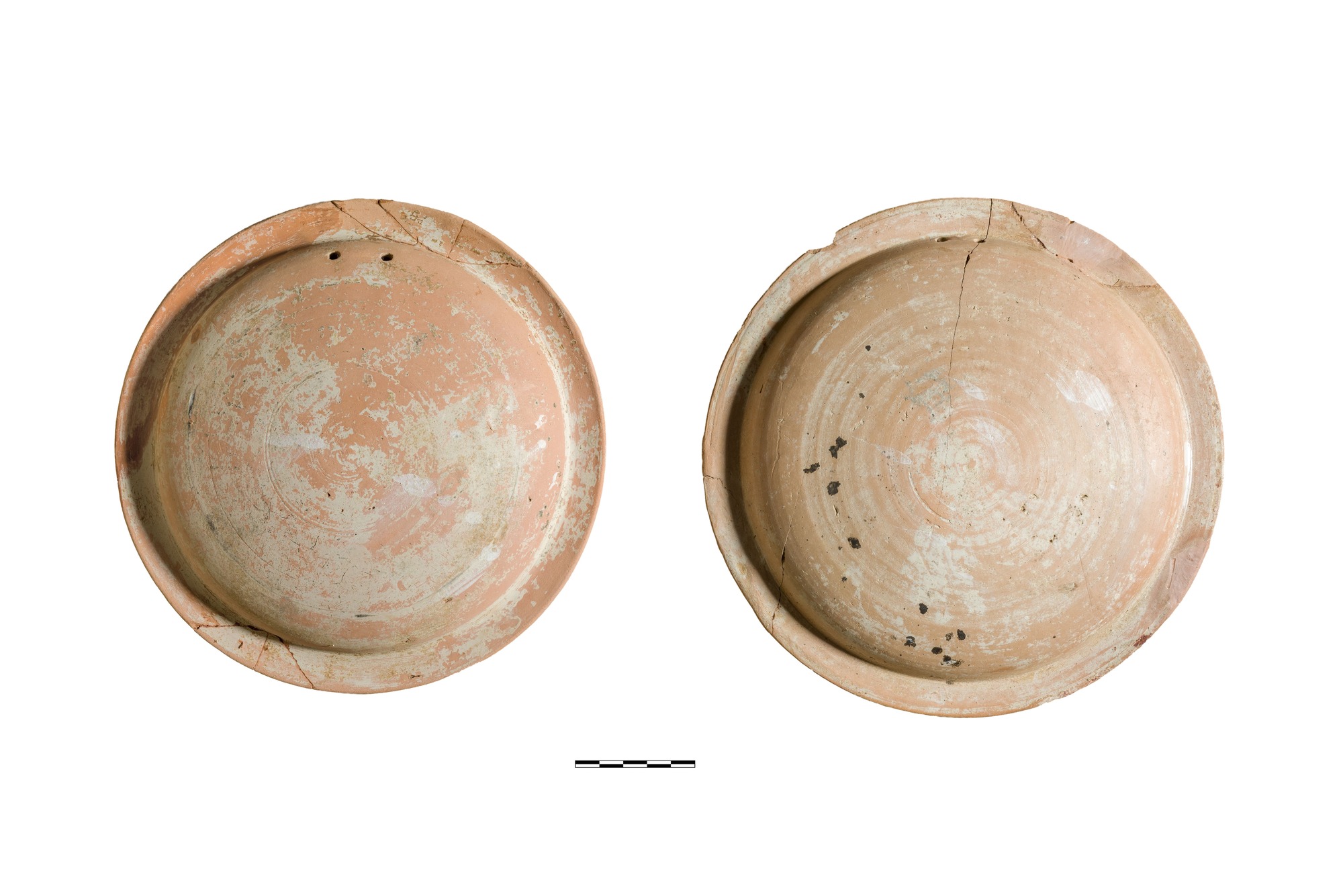
The shield models belong to a set of at least ten identical objects. They are 20 cm in diametre, covered with a white slip, and feature suspension holes.
In antiquity, victorious armies dedicated the actual shields of their defeated enemies to major Greek sanctuaries or other public spaces. It is well known that Alexander the Great offered 300 Persian shields as a votive dedication to the goddess Athena after the Battle of the Granicus. These were displayed on the southern architrave of the Parthenon, and their suspension holes are still visible today. A bronze shield, among those dedicated by the Athenians in the Stoa Poikile after their victory over the Spartans at Pylos, has also been discovered.
The shields from Abdera were found in the southern precinct of the ancient city in 1967. As they did not come from a systematic excavation but were handed over by a private individual, their exact find context is unknown. It is nevertheless assumed that they were originally suspended within a building dating to the Hellenistic period.